Rob Garcia (drums)
Diversity is always a key element for outstanding jazz composers. Rob Garcia covers this path and more. While he has performed with wide array of jazz artists, including Steve Davis, Joe Lovano, Reggie Workman, Dave Kikoski and Bruce Barth, he is always a well grounded personality with a degree in holistic medicine and a even rarer distinction of being an ordained minister. This might explain his ever expanding duties and participation (currently two community/collective groups) in helping fellow musicians in New York City gain greater access and exposure.
This openness and desire to grow as an individual and a musician can be seen throughout Rob Garcia's work. On his debut, Place Of Resonance (Consolidated Artist Productions), Garcia emits a personal ethos that carries through his arrangements and the musicians who are performing them.
A unique sense of direction and calm flows on every tune. "(A Jump In) Quicksand" is one of those moments. A peaceful number that is delicate and touching as a result of Michel Gentile's fiery flute work and Garcia's crisp precision (especially on the solo towards the end). But also the masterful, pulsating work that Michael Formanek gives to the bass will make your heart start to beat in unison with the piece.
"Resonance" showcases, Dave Kikoski's immense talent and he gently crafts Garcia's piece into a sublime set of movements with patterns that would easily make Oscar Peterson smile. Kikoski has always been one of the under-rated pianist of the last 20 years but within Garcias arrangement he really does shine. Matt Renzi's performance is bold and yet understated. Garcia adds strong timing and punctuations to compliment his bandmates but when it comes time to step up he lets things rip and the listener has to take notice.
"Somewhere Along The Path" and "Fleurette African" (a lesser known piece by Duke Ellington) showcase a more gentle side to Garcia's compositions. Both have a lovely melodic tone that captures the group in a contemporary form but also completely soulful in a spiritual way. Originally recorded in 1998 (released in 2001), you would have thought it was recorded a week ago. An incredibly strong debut. Overall, Place Of Resonance is a stellar debut that when you find it, it is well worth every dollar and will repay you with every note.
 While side projects and performing with other musicians consumed a good portion of time after the excellent debut, Rob Garcia would return in 2007 with a completely different lineup (except Michel Gentile on flute) on Heart's Fire (Connection Works Record).
A set that has elements of modern/contemporary jazz as well as some lovely Latin tinged numbers. The addition of Yoon Sun Choi on vocals feels fresh and vibrant. Choi emits an almost Karrin Allyson (or British R&B/Jazz vocalist, Juliet Roberts) quality through numbers like "It's Ruby" and "Be A Lover". Heart's Fire delivers with delicious and infectious rhythms that still contain the spiritual undertones that were present on Place Of Resonance.
Garcia performances sound energized by the new group and the joyous atmosphere here really gets your toes tapping and your body moving. Daniel Kelly takes over piano duties on Heart's Fire and while not as gentle and introspective as Kikoski, his playing fits perfectly with Garcia's global arrangements. "Sangha" (also the nickname of the Garcia's group) is a Buddhist term meaning community. This is obviously one of the stellar pieces on the set. Garcia's drum and percussion work is essential to the movement of this piece. It's reminds me of some of the early work by Mongo Santamaria. Along with Choi and Kelly this "Sangha" floods your consciousness with a sense of belonging. "Thank You" adds that little bit of latter period Elvin Jones/Rashid Ali circa Coltrane bliss to make for a beautiful closing number.
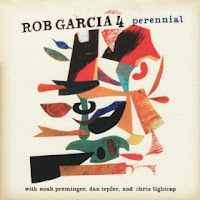 Growing as a composer, leader and performer, Garcia would move on to be a part of another collective, this time as a member of the Brooklyn Jazz Underground which would release his third album, Perennial (BJU Records; 2009). While his previous two releases were vibrant and searching for a different type of peace, Perennial feels like Garcia has achieved the spiritual balance between composition and performance (both from within and with is band).
Settling in with a new quartet instead of the ensembles of his first two albums brings the tunes into very tight focus. Noah Preminger on sax has a more personal tone that stands before like a mirror. Dan Tepfer, whose work with George Schuller had struck me a few years ago, sounds immaculate here.
Garcia again creates a sound world that is both personal and forward looking. There is a sense of search for what comes next. Another reference to the spiritual nature of the man and his music. "Season Of Stone" exemplifies that ethereal calling with superb deliver from each member. Garcia gives them all opportunities to shine through. Bassist, Chris Lightcap has a steady rhythm and blends well with Tepfer and Preminger's melodic tones. Garcia keeps the group in line with some subtle taps and swathes but it is the rolling nature of the "Season Of Stone" that keeps the listener engage from note to note, chord change to chord change. Intense and exhilarating.
"Vortex" feels like it could fit snug onto a Monk record. A close beatnik-like feel comes over me while focusing on Lightcap performance. It's just under the crisp notes of Preminger but you get a real free movement here that Garcia hadn't shown on previous albums. The tune switches gears quickly midway through and group stretches in multi-layered fashion but revolves back to a lay the tune gentle back on its feet. "Little Trees" might be the most forceful, fragmented and raucous of Garcia's pieces on the album. Feeling like a suite it encompasses a number of different themes which each member there moment. They all intersect with Garcia's changing patterns and timing. This group has a definite identity and sense of adventure which is catapulted by Garcia's writing.
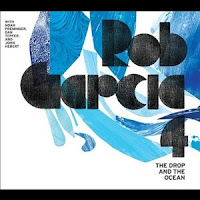 The sense of adventure and ever-moving forward get solidified with The Drop And The Ocean (BJU Records; 2011). An album that is solid from start to finish, Garcia seem to have settled in on the quartet format (for the time being) and it works well for his compositions.
The stability Preminger and Tepfer carries over, now added by the increasingly omnipresent and cerebral bassist, John Hebert. And while there is adventure on The Drop And The Ocean, there is more a feeling of oneness that permeates through each piece.
Garcia's spiritual concepts come into play again as The Drop And The Ocean is a journey to finding inner peace. "Will" swirls with freedom and imagination that the individual can do what she or he plans to do. Perminger opens things up with a length set out resounding notes quickly joined in by the rest of the group. Tepfer and Garcia have a beautiful exchange early on that seems both improvised and uniquely written. "Lost By Morning" will have you imagining sitting at a table on clubnight listening to this quartet softly carry you and your thoughts far away. A ballad that's real focus is to make you stop, relax, think, listen and move on. The fast environment that we live sometimes doesn't allow that to happen.
"Humility" is simply that--a thoughtful and introspective ballad in which the group with a few surprising twist in melody but it maintains a touching vibe. The quartet turns moves from emotional to improvised and back again. But even the uninitiated would not feel the effects. This is a brilliant piece. "The Return" sets this long journey straight. We the passengers have travel a great distance in both body and spirit. This piece helps bring everything back to a constant but with a new outlook. There's an all-around more emotional connection one will find on The Drop And The Ocean that the previous albums only alluded to. This Garcia's best record to date.
Usually when a jazz artist works within the eastern philosophy or spiritual aesthetics they tend to lean heavily on the latter work of Coltrane. Rob Garcia doesn't do that. His spirituality/philosophical thoughts may lay in the same camp but he is working in a completely different direction. His compositions and playing are both compelling and inspiring. Garcia is quickly and quietly turning into a unique voice within the jazz scene.
 Ingrid Laubrock Anti House


